Category: Business

  • My Totally Great Guide to Managing Email Like a Pro

    My Totally Great Guide to Managing Email Like a Pro

    This morning I read a new article from Joshua A. Krisch posted to fatherly.com called “Why Email Is So Stressful, According To Science”. As the headline makes clear, the author believes that email anxiety is one of the biggest causes of stress for the average office worker.

    Everyone seems to have their own system for dealing with email, whether it’s treating it like a game, trying for inbox zero, responding to a few at a time and ignoring the rest, or throwing their hands up and declaring email bankruptcy.

    The last option is not uncommon, but is also scary since we all assume that somewhere in those unread emails is that exact opportunity that we’ve been waiting for, and it’s through our inability to manage the growing pile of correspondence that we’re missing out.

    Another fear is that we’ve waited too long to respond to an email, and as time goes on we naturally want to respond to it less, as our guilt around not responding grows. The podcast Reply All decided to fight back two years ago by starting the holiday Email Debt Forgiveness Day, which was just a few weeks ago. If you missed out you can still find info on their site on how to celebrate, along with a helpful email template.

    But does it have to be this hard? I get stress from email time to time, but I admit that it’s never been all-consuming in my life, personal or work. I don’t think that I’m preternaturally disposed to being less stressed by communication, far from it. I have found a few things that make email easier to manage for me, and I’m going to put on my productivity wizard hat to dictate how you should handle your communications.

    1. Check Email Less Frequently

    This one should be the most straightforward. If you check email less frequently, you have a better opportunity to treat it like a discrete event. Use the novelty of checking a few times per day to provide more focus to what you’re checking.

    I keep my inbox clean enough that I’m ok with keeping it in reverse chronological order. I click at the top, and have the Gmail settings for the send and archive buttons as well as the auto-advance lab feature on. I also use keyboard shortcuts on my accounts, allowing me to use my keyboard more, which I’m already using to write.

    You can find the Send & Archive button as well as the keyboard shortcuts in Gmail in the settings page located at https://mail.google.com/mail/u/0/#settings/general. The Auto-Advance lab feature can be turned on here: https://mail.google.com/mail/u/0/#settings/labs


    The Send & Archive button on email compose means I save a few clicks and a screen load.
    The Auto-advance feature also saves time by letting me move directly from one email to the next.

    Using those features I can more quickly progress through email while clearing out my inbox. Every email is acted on and archived.

    I start out with a win by making a lot of email skip the inbox in the first place by filtering them to folders if they are automated notifications or newsletters. I currently use Unroll.me to group emails together, but I’m phasing it out as I transition to a new email account.

    2. Get off of the Notification Cycle

    I’m not a fan of notifications pretty much anywhere. I have a few things that can send me notifications like work messages and texts, but otherwise I let apps and websites stay quiet unless I choose to check on them.

    I could expound upon how this relates to email specifically, but honestly it helps reduce stress with a lot of how I use the web. I end up checking some things more frequently than I’d like, but I let them fit to my schedule, not the other way around.

    3. Know When to Say No/Manage Expectations

    I know the urge to say yes to requests can be powerful. I do this all the time, and I don’t fault anyone else who does. It’s only over the past few years that I’ve started learning how to say no to things that don’t fit my skillset, or that don’t directly help me gain new skills or serve clients better.

    I get the idea that you miss 100% of shots not taken, but maybe those aren’t the shots that I should be taking anyway.

    I also try to let people know when and how I’ll respond, if I am going to have to pass on something, or if there will be further action taken. Being direct is one of the best things that I’ve learned to do in email both to set expectations for others, as well as clarify my thinking.

    If I can put my desires into words, I can have a better chance of making them happen.

    4. Treat Email as a Separate Medium

    This is a habit that’s hard to make. What I mean by treating email as a separate medium is that it’s not a text, it’s not a letter, and it’s not a social media update. Email has existed in a similar form to what we use now for almost fifty years, yet we still want to write full letters with greetings and salutations.

    Chances are I know who you are if I’m responding to an email, and vice versa. I understand that some people feel rude sending short emails, but generally an email that can be answered quickly – or doesn’t require an answer at all – makes recipients feel even better. One hundred people can send me emails that individually take them a few moments to compose, but if they all send in teh same day that equals hours of time dealing with them.

    On the topic of emails without response, I’m still looking for a polite way to let people know that emails don’t require a response. Don’t feel obligated to send me a “Thanks for handling this!” email, when all it ends up meaning is another message to manage.

    So, that’s my attempt at an email listicle. What email tricks should I be trying out? Make me feel more productive!

  • Sometimes You Have to Let a Project Rest

    Yesterday I wrote about my starter child theme For Genesis, and said that today’s post would both be earlier, and cover a code generator.

    As you can probably tell by the time of posting, I didn’t keep that first promise, and I think I’d prefer not to keep the second promise either.

    It’s not that I don’t want to show off this code, tell you how it saves me time, and make it available for your use, since I do. But I realized yesterday that there’s a lot of cleanup that I want to do to both my starter theme and the theme generator.

    I spent a fair portion of my downtime today updating my starter child theme, and making some modifications to my development toolset. I’ll have to talk about that sometime too, since things that I assumed would be simple ended up taking far longer than intended.

    Why it’s OK to Delay

    Because it’s my excuse for not getting something done. ????

    Ok, that’s not quite fair. True, I have given myself some extra time, but I also realized that I needed to step away a bit, and look at this with fresh eyes. An issue that I was having with a build tool earlier came down to it referencing an incorrect folder, pulling the wrong version of a file. A lot of dev work comes down to these simple mistakes, where you’re sure that everything looks like it’s supposed to, but something minor slips by.

    In taking a bit of time to rest, you let yourself view a project fresh when you return, which can often lead to spotting things that you missed before due to carelessness, or more likely over-exertion. Those things that were in your blind spots are suddenly lit up, making you wonder why you wasted hours in the first place.

    So that’s what I’m doing. I’m taking some of my weekend to clean up some personal code because I want to deliver something that has fewer bugs, and is more in-line with the quality that I want to put out.

    I’ll save those posts for next week most likely, since I figure work related things are more likely to be interesting on weekdays. In the meantime, have a good weekend!

  • Tools and Techniques That Have Improved Development Tasks

    Tools and Techniques That Have Improved Development Tasks

    Next up on my run-through of things that have improved my workflow is development tasks. This is one area where I know that I need a lot of improvement, as there are so many tools out there.

    Starting Projects

    I typically begin each WordPress based project via Vagrant and a VVV box on my local machine. We did a meetup on this and other local development environments last month, and some notes and links can be found on our recap post.

    I started using Brad Parbs’ excellent addon Variable VVV, or just VV. It’s made creating new development sites even easier, and adding blueprints on top of that have made it even even easier. For instance, this basic blueprint installs the Genesis framework, installs a Genesis child theme that I made that is in need of update, activates that child theme, installs Gravity Forms, activates and licenses it, installs and activates Jetpack, and loads some test content from wptest.io so I can see how the site that I’m creating looks with various content. Not bad for what becomes a one line command!

    {
      "genesis": {
        "themes": [
          {
            "location": "An up to date Genesis Zip",
            "activate": false
          },
          {
            "location": "davidwolfpaw/obm-genesis-child",
            "activate": true
          }
        ],
        "plugins": [
          {
            "location": "An up to date Gravity Forms Zip",
            "version": null,
            "force": false,
            "activate": true,
            "activate_network": false
          },
          {
            "location": "jetpack",
            "version": null,
            "force": false,
            "activate": true,
            "activate_network": false
          }
        ],
        "options": [
          "current_theme::obm-genesis-child"
        ],
        "demo_content": [
          "link::https://raw.githubusercontent.com/manovotny/wptest/master/wptest.xml"
        ],
        "defines": [
          "WP_CACHE::false",
          "GF_LICENSE_KEY:: My Gravity Forms License Key"
        ]
      },
    }


    The most important thing for me is that I have things to start with. VVV and a starter theme or plugin do more for me than just save time. They also save mental energy and keep me away from that dreaded blank page that makes even simple projects more daunting. With a starter I feel like I’m half done when I get started, because in essence I am. Every project doesn’t need a complete rewrite, and the time and energy saved can be better put to the specifics of this one project.

    Maintaining Projects

    I’ve been getting better at committing code to a version control system for every project. I’m still working on most things solo, but when someone else needs to jump in or review, it’s been a big help, at least in making me look more professional. For clients we use Bitbucket, but in general I’m going to start posting more things up on Github. I’m at least going to put up a gist library of common code snippets that I use and reuse with lots of projects, as that cuts down the amount of work and places where mistakes could crop up if I am constantly redoing it.

    I keep copious notes, often in Drive in a client folder, that I can review for later, as well as the tasks in Trello that I mentioned yesterday. Even if I’ve got a feature or change that I know is not coming up now whether through time or budget constraints, I prefer to keep it in mind so that it doesn’t surprise me later. Plus, there are often easy wins, like being able to reuse member registrations for one portion of a project for another, that can allow me to offer extra value to clients with little additional work. Writing something right the first time is a lot easier than writing it one way then having to shoehorn a feature in later.

    Conclusion

    I specifically didn’t go too in depth, because when it comes to tools, I mainly feel that what works for you works. I use Sublime Text as my editor, but there are a lot of great ones out there. I personally don’t really like using an IDE for general web development, and like the versatility and breadth of plugins that Sublime offers. I also think the process that works is the one that you stick with. Despite the things that I know that I need to get better about (setting up projects in Sublime, utilizing Grunt as a task manager, etc), I can still be productive and slowly add new knowledge over time.

    Do you have any specific tools or processes that have saved you lots of time or that you expect to save time in the long term? I’m always looking for ways to level up, so let me know!

  • Four Things ‘The Wind Rises’ Taught Me About Passion

    Four Things ‘The Wind Rises’ Taught Me About Passion

    Last night I rewatched ‘The Wind Rises’, an animated biopic about the early life of Jiro Horikoshi. Mr. Horikoshi was an engineer who designed airplanes, most notably the Zero Fighter infamously used by Japan during WWII. Like another Jiro that I wrote about two years ago, he had dreams of his work that led him to his passions.

    There were many negatives to Jiro’s work (which he famously acknowledged), as well as a long list of lives affected or ended by his creations. The story presented in the movie is not about these negatives or the moral dilemma of the subject. Instead it portrays a man driven by his passion, quite literally dreaming of amazing creations.

    thewindrises2

    I’ve taken a few key points away from the movie relating to how I view work and passion. I truly believe that the most powerful thing that you can do for yourself is to work on your passions.

    1. Start With Love

    The Wind Rises - Start With Love

    It’s tempting to look at whatĀ others are doing that seems easy or fun and decide to do it. It’s even more tempting when you can seeĀ people making a solid living in whatever industry you’re viewing and decide that you will do just as well. The real challenge is to avoidĀ the temptation and instead focus on the thing that you can’t stop talking, thinking, reading and even dreaming about.

    If you can’t start with “love” then everyone who does love will beat everyone who “likes” or “hates”.Ā 

    James Altucher

    The things that you love to do are those things that will carry you through when it gets rough. When you feel like you’re stuck in a rut and everyone is surpassing you and it’s not as easy as it initially looked. When you get so far down but don’t even question it, because of course this is the thing that you were meant to do.

    2. Learn From Your Mistakes

    The Wind Rises - Learn From Your Mistakes

    You will mess up. With any luck, you’ll mess up big time. If you do this and you keep going, you know you’re doing the thing that you love.

    I’ve made plenty of mistakes in my work, and continue to do so. The important thing is that I attempt to learn from those mistakes and mitigate them in the future.

    It is easy to screw up and give up, but why stop when you’re putting in your 10,000 hours on the way to mastery? Looking at it another way: I’d rather keep going than have to start over again somewhere else because I’ve made a mistake. You can’t gain mastery if you give up after your first setback.

    3. Do the Hard Work

    The Wind Rises - Do the Hard Work

    Passion is great, but sustained work is exhausting. There will be times when you question whether the love is enough to get you through. Those are the times that you need to dig in and focus on the hard work.

    Sometimes you have to do something that you don’t want to do on the way to your goals. Sometimes you have to work on or learn things that you don’t care about because they are stepping stones to the things that you do want to be doing.

    It’d be a lie to say that doing what you love means that you never get tired of it and never feel drained by it. The important thing, like sticking through mistakes, is staying the course even when the thing you love sometimes feels like the thing that’s killing you.

    4. Keep Dreaming

    thewindrises4

    Finally, don’t forget that love that got you where you are in the first place. Work will become stagnant if you don’t keep thinking of ways to expand and improve. You can become the best at the level that you’re at while still having people in front of you to follow.

    The nice thing about perfection is that it’s an impossible dream. The greatĀ thing about passion is that it doesn’t even consider that. It will drive you to strive for perfection, giving you new dreams of new things to get you there.

    Do you want to get better? Do you want to learn how to do something new? Take a hint from the first tip that James Altucher offers in the story that I just linked. Love it. Love your work, then follow the rest of the steps to get there.

  • Sharing This Link is a Crime

    Sharing This Link is a Crime

    I’m not generally a political person, though I do have an interest in the process and outcome of politics from time to time. This is especially the case when it comes to technology, and the future of the web. As the revolving source of my life and livelihood, I care deeply about the usability of the open internet, and how that changes based on the opinions of others.

    Tonight, the president will be giving the 2015 State of the Union Address. I won’t be watching it live. I will instead be at Orlando Soup, looking at some upcoming projects to benefit Orlando, and trying to do a small part to help out. I do know that one topic that he is going to discuss is changes to the Computer Fraud and Abuse Act, and will tacitly if not openly be offering support for CISPA, the Cyber Intelligence Sharing and Protection Act, which is being reintroduced for a third congress, ready to get terror support after the recent Sony hack.

    Part of the updates to the CFAA involve changing hacking crimes to racketeering crimes. The CEO of Errata Security has posted a bit of what this means, but the short of it that is important to me is that sharing publicly available information (or in some cases viewing it) can be seen as a crime almost as bad as making that information public in the first place.

    I answer questions on Quora. I share knowledge at in person events and lectures, share thoughts via Meetup and Facebook groups, link to new information on Twitter, and post some of that same information here, on my own blog. Will I be liable for links that I share to warn people of new hacks and vulnerabilities on their sites? If I give out some information on the WordPress support forums relating to security issues, how am I certain that I won’t be running afoul of the law? By the way, of the many companies that aren’t 14 year old tweeters in basements, even though they aren’t blindly supporting Rep Mike Rogers, Automattic is one of the companies standing up to prove him wrong.

    Next weekend I’ll be helping out at Code for Orlando. We’ll be working on tools to showcase what locals can do with open city data, with the goal of producing economic output for the city and the creation of new companies. The ability to view and interact with data that is created by us and on our behalf is important. The control of that data has become more valuable than the control of physical assets, and there’s no doubt that limiting access is an attempt to consolidate that control.

    They may say that they want us to share, but what they really mean is that they want a one way street. We’re free share our information with the government, whether we choose to or not, but we get arrested, fined and jailed if we choose to share with anyone else.

    CISPA image by Paul Swansen is licensed under CC BY 2.0

  • I Don’t Do NDA’s

    Last week I mentioned that I don’t respond to cold partner offers, and some of the reasons why. I’ve been wanting to write this specific post for a long time, but haven’t done so mainly because I had a hard time verbalizing my rationale. I was working on a gut feeling, with the end still serving my belief, but without any support for why that belief was valid. I think that I’ve thought it through enough now that I can give a more concrete answer.

    Originally, my argument was that ideas are a dime a dozen, and that I’m too busy to take time stealing your ideas, since I have plenty of my own that I’ve not acted on. As I mentioned in that prior post, I won’t show nearly as much enthusiasm for someone else’s idea, so the chance that I’d implement it would be slim to none.

    Note that I’m specifically talking about cold NDA’s, where I’m requested to sign one before even talking to someone about their company. That is a sign of backwards priorities for me. I mentally see someone who has an idea (most likely not even half unique) who envisions themselves as a paragon of business, using their (again, not unique) talents as a business person to marshal others together toward a common goal: making that founder boatloads of “internet money”.

    There’s a way to protect your idea: make the value proposition not about the idea (which it already isn’t anyway). Tell me that you have a B2B marketing idea, and you are the exact person to implement it because of your 20 year experience in B2B marketing. Show me that I would be wasting time trying to develop a warehouse logistics tool without your guidance, since your tenure as a VP at a Fortune 500 shipping company gives you insight that I could never have.

    If you can’t explain this in your pitch then it doesn’t matter. No matter how good your idea is, if you cannot prove yourself indispensable, then there’s no reason that you can’t be dispensed with.

    Protecting an idea is generally an exercise in futility. No one is contacting me who has a wholly unique, patentable process that has not been thought up before. Not only that, but it weakens the state of that idea. I would much rather allow market competition, or the fitness of the executor of any new product or service to determine success, not simply a document gagging others from discussing it. If you share your idea with someone who is in a much better position to make it into a reality, then I’m probably going to buy from them anyway, as will the general market.

    In the end, the market does not care about who thought up what first. It cares about who did it best, cheapest, most effectively and efficiently, and most used. Popularity and breaking free of the long tail validates and pushes even more people to use a product or service, and the network effect is one of the few things that cannot be bought.

    If the first thing separating you and me from having a conversation is a negatively charged legal document, it may as well be an ocean.

  • Setting Expectations With Your Teams

    Setting Expectations With Your Teams

    A colleague complained this morning that they had difficulty keeping in touch with other companies and their contractors due to the proliferation of competing chat services. While the many options now available can serve a wide variety of needs, the lack of consistency and connectivity between them can be a roadblock when you just need to get things done.

    The teams that I’m on use a variety of tools to manage internal and external communication. We use Trello for general project management, Dropbox for file storage, Google Drive for document editing and storage, and Google Hangouts for most of our team chatting.

    While this isn’t a post on the pros and cons of specific tools or a guide on what to use, keeping on top of things is important. Take it from someone who still hasn’t gotten the hang of using a CRM to manage existing and potential clients. Or someone who understands that there isn’t as much search-ability or asynchronicity with Google Hangouts, but takes advantage of the flexibility and integration that it offers*.

    What is important is that everyone is on the same page as to what is being used, and is properly setup and knowledgeable of their tools. At a previous job we used Basecamp for client communications and project management. If a client emailed us a file or request, we would copy it into Basecamp, then respond back to them with the Basecamp link and a reminder to use that in the future. This was for the first two times this happened. Future email requests would be ignored entirely.

    If you bring new members onto your team, it’s your responsibility to get them up to speed with how you work. Don’t let one team member use Skype, while another is on Slack and yet another only texts or emails. Have systems in place for things that are important, and distribute those tools and processes equally to everyone that you work with. Need to share large files with your coworkers? Get Dropbox for business and pay for everyone’s accounts. These are business expenses, and should be treated as such. The cost of lost opportunity and wasted time is often much higher in the long-term than a recurring monthly fee.

    Whatever tools you choose to use, consider not just how it works for you but how it works for your contractors/employees/team/clients. Transparency and openness is for more than just your code – it’s for your communication too.

    *I recently had a client who first couldn’t find the link to the Hangout chat right in the calendar invite email that they accepted, then couldn’t load the page. They asked me via email to use a “real world” tool, like Webex. Guess stalwarts really can keep making money purely through complacency.

  • Why I Don’t Respond to Partner Offers

    This morning I received an email asking to partner on a project. Generally I can respond or ignore and move on, but the length and number of red flags in this particular email made it worth commenting on. Attached is the full text of the email, minus contact information. Note that it arrived in my inbox, and I’m still not entirely sure that it’s not spam.

    Hi Potential Partner,

    (1) I am responding to your advertisment on a website, as a web developer, meaning you have invited me to send you this email, however I have no intention of repeatedly sending emails to you, therefore there is no need to ask for unsubscribe. While these contents may not precisely meet your current desires, it is a genuine offer and should be considered carefully, although it is realised it will only attract a high achiever.

    (2) A friend and I are building a website but need some help coz currently the learning process is very slow. Free help is not expected. It has been started by using PHP & MySQL. By attempting to enter into hourly rate negotiations with web developers in the past, it has been found to be no faster than learning the process from the Internet, and for that reason web developers on a partnership basis are now sought.

    (3) We are seeking one leading developer and also developers who operate in a special industry. The leading developer needs big ambitions, but more importantly works speedily and be very reliable, and be able to help lead a huge project and have the determination to succeed with a burning desire to become very wealthy, both in asset and in knowledge, and be able to set aside personal emotions and conflicts that involve other people. Setting aside personal emotions and conflicts means to behave as if matters did not happen when people upset your feelings by disagreement or for you to behave towards people in a professional manner when you believe they are not nice. Initially part time input, probably 2-3 hours per day, would be acceptable and any full time work can continue as usual.

    (4) The intricate details of the intended website cannot be provided coz if they were any person could beat us to the goal line. That is sensitive information which will not be released. Basically, it will be a very unique international trading website that will be able to offer all goods and services at substantially reduced prices, and will provide free advertising for the same, and provide employment opportunities for everyone around the world, and will provide very attractive environmental incentives. It will be 100% legal and will enforce natural justice. It will be a website that every law abiding citizen will want to be a member of. There is no similar website currently on the Internet, as if there was, we would all know about it in a very short time.

    (5) There will be no request to any of the web developers to contribute any financial or monetary payments.

    (6) Web developers on a partnership basis are required, meaning a “partnership” is that the partners are “self employed” and “share in the profits” and receiving regular weekly or monthly payments or receiving piecemeal payments or money paid up front do not apply. This is not a job that we are offering nor is it an offer to pay cash on completion of a few hours work, nor any other kind of invitation to extract money. It is being part of a very exciting and fruitful business. A business that will in the long term resolve all social and business problems.. The web developers will need to acknowledge that short term rewards have only little profit. The web developers will also need long term foresight, as the rewards from this project are expected to start in around 6-12 months and after 2-3 years they are expected to be in the millions of dollars but all of that will require the utmost dedication, work speedily, and be very reliable.

    (7) Consideration is needed for the web developers to invest time of probably 2-3 hours per day, which is not a huge investment, and be paid for that time from the profits of the website which is expected to start in around 6-12 months and in 2-3 years payments should be in the millions of dollars. If a competent web developer is like many who spend 2-3 hours per day entertaining themselves by watching non constructive television, then a wise and constructive exercise would be to exchange that time towards this project.

    (8) We only want to receive replies from web developers personally and not their managers, assistants or agents.

    (9) We do not want to receive replies from people who cheat and or scam and or people who attempt to extract money without working for it.

    (10) We get many people telling us that they are the best to hire, but we have no interest in that kind of propaganda, therefore to enable us to determine the web developer’s level of competency we will require from an interested person to modify some PHP coding. When that exercise is satisfactorily completed we can release further details about the intended website, our history and current circumstances. If you have any questions, doubts or skepticism then those matters will be addressed at that time.

    (11) I am a New Zealand citizen and have operated businesses there for many years however I’m not in that country at this time.

    (12) If you were born in a poor environment, like me, that was not your mistake. But if you die in a poor environment that is certainly your mistake. Like most people, I have made many mistakes in the past however I have learnt from them. But dying in a poor environment is not likely to be another mistake. A web developer who ignores this opportunity may later realise the mistake.

    (13) It is an ENTREPRENEURIAL WEB DEVELOPING PARTNER we are searching for. Someone who is ready and willing to invest the small amount of time of only 2-3 hours per day. A real entrepreneur is a person who undertakes calculated risks together with business innovations in an effort to transform those innovations into economic goods or services and is willing to rely on the payments that satisfied customers are ready and willing to pay. And if an innovation fails to meet customer’s satisfaction, a real entrepreneur will search for a remedy so that customers are entirely satisfied, but a real entrepreneur will never quit, works speedily, and is always reliable.

    (14) Conclusively,
    (a) PLEASE DO NOT reply to this email if you do not fit the description of a real entrepreneur.
    (b) PLEASE DO NOT contact me if you are desperate for money to satisfy reckless spending.
    (c) PLEASE DO NOT attempt to convince us that you are the best by words alone or to try hourly, weekly or monthly payments or post or pre paid services.
    (d) PLEASE DO NOT ask me to chat on Skype or other instant messenger. Communication by email, which keeps good record of what has been said, is preferred.
    (e) PLEASE DO NOT expect a reply to any message when it is obvious this paragraph has not been understood.

    My breakdown of this email will be very brief, because I could probably talk about it for a few hours, given the amount of content that I have to work with. What it boils down to for me is:

    • The tone and grammar of the email does not match the clients that I choose to work with, let alone anyone that I would partner with. While this person couldn’t have known that in advance, they may have been better off playing it safe with a much shorter email to gauge general interest before scaring me off.
    • The whole “we only want to work with awesome people” pitch doesn’t work as well in real life as it does in movies. It reeks more of arrogance than ambition.
    • Cold-pitched partnership requests like this always say that they don’t expect free work, but want to pay on the promise of the product’s success later. While many new companies succeed, the odds are stacked against most ventures. On a purely practical standpoint, I’m making a risky gamble on any new project. I may as well make it one that I’m truly passionate about.
    • I have intended on writing a post on why I am not a fan of NDA’s for a while, but basically, if the only thing that you have to succeed is secrecy, you’re probably not going to get very far. I don’t want to know that you have an idea that no one has thought of. I want to know that you have a skillset that no one else has to develop that idea.
    • Telling me what to do with my time (set aside emotions, work non-stop instead of “non-constructive television”, don’t talk myself up as a hire with “propaganda”, let my circumstances be guided by “my mistakes” and so on) is arrogance at the highest level. Prove to me that you know better than me before expecting me to take your advice.

    There is so much more that I want to say about this particular email, but my main point is that almost any offer to partner on a tech project is going to be a hard sell to me. I don’t particularly have the need or interest in stealing other peoples’ ideas, as I’ve got more than enough projects of my own that are languishing. Similarly, I find a hard enough time making time for my own projects, let alone something to directly benefit someone else with no promise of payment for myself.

    My suggestion for people looking to find partners is not to blindly reach out, but instead put yourself into the community and make it known where your passions lie (you are passionate about your business idea, right?) so that like-minded individuals will be attracted to you. Be the flame to the moth, not the net. This will ensure that you’ve got someone who has just as much interest in the success of the business as you do, and not just a payout. They’ll keep momentum up at moments where you falter, and have a commitment that you won’t find from cold-emails, which will most likely result in play-for-pay individuals, if any response at all.

    I’ve known most of the people that I work with for several years, and have worked with them on other projects before moving into anything more serious or full-time. There’s no question that they are committed to what they do, and I’ve got an easier time making a pitch if I want them to partner with me on a new venture. I cannot think of a better pool to pull from.

  • WordPress and Enterprise Level Solutions

    WordPress and Enterprise Level Solutions

    It’s already been better discussed elsewhere, but the latest security release of WordPress (v4.0.1) exposed a fatal flaw in how some developers improperly created their own shortcodes, eschewing the Shortcode API that has existed since v2.5, making it a nearly seven year old issue.

    The discussions on whether this update should have happened, what it means for automatic updates and the ill will that can be created when “WordPress is broken” have been had already, causing those of us who’ve had to explain to people in the past the difference between WordPress core and community made plugins and themes work overtime in the past week. Last night I got into a discussion over Twitter concerning the issue and how it relates to WordPress being viewed as an enterprise level solution for website development.

    The discussion that I had was concerning a web property owned by a multi-billion dollar corporation. My gut reaction to say that they should know better has to be tempered with the fact that no, they should not have to. It’s the job of every site owner to vet their system, but to make a platform that is truly global, that vetting should be delegated. Web hosts and security analysts should vet code for collisions and bugs. Theme and plugin shops should ensure that their products adhere to best practices. Putting accountability for the full stack on each site owner is not only inefficient, but impractical. Inherent trust should exist that code in the official repository maintains a baseline level of code, trust that is eroded when the problems that occurred with a subset of sites on this update occur.

    I’m not one for intrinsically weakened systems. I don’t think, for instance, that the ability to toggle off a security improvement like this should be readily available. That said, it is to the developer who understands the system, as it is to write them in a system-approved manner in the first place. What I do think needs to happen is a better system of education, both for clients and for developers new to WordPress (or new to specific tools in it). There needs to be more public discussion on why progress will invariably cause a bit of trouble upon adoption and how to react or future-proof. There needs to be discussion on how that trouble can lead to lack of faith, and a mistrust in the next level of WordPress growth: higher adoption among enterprise clients.

    To avoid these discussions invites stagnation of growth, inhibition of progress and a lack of advancement for WordPress and its adherents everywhere.

  • Helping Others to Help Myself

    Helping Others to Help Myself

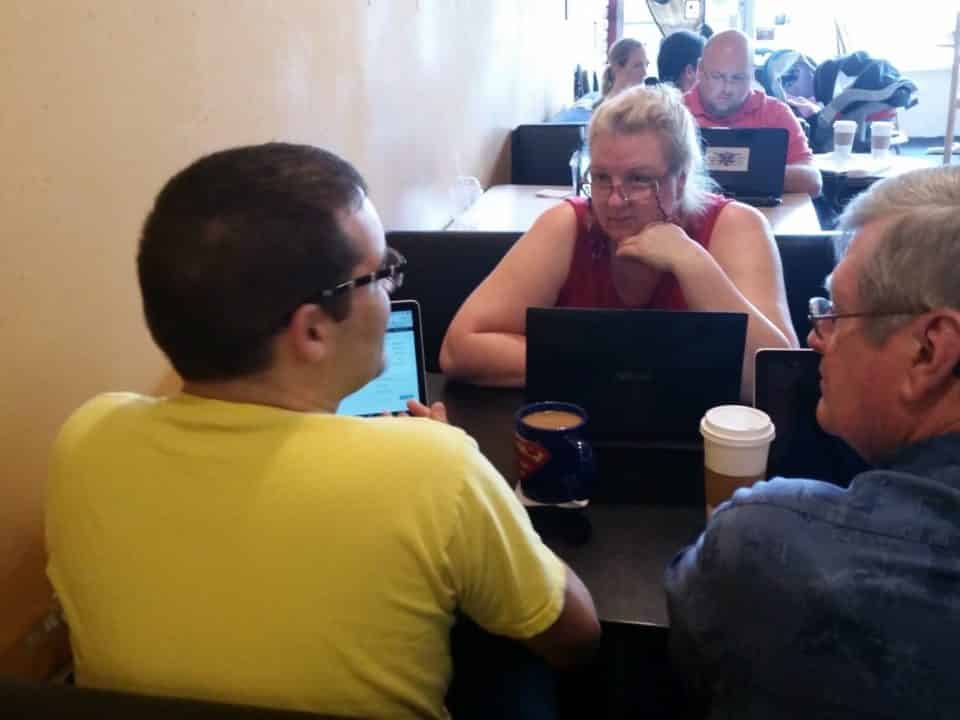
    Last month I undertook an ambitious help-desk tour with the WordPress Orlando community. The goal was to meet with local WordPress users in a casual coffeehouse environment and help them with any questions that they had about their websites. Each meetup occurred over four hours at a different coffeehouse each day, with the goal of getting more businesses to each shop, as all of them are local shops with owners that are community involved.

    While I didn’t keep exact count, there were about 25-30 people who came by over the course of the week, both to help and to be helped. I learned plenty of things myself, and a few things that I felt were worth sharing.

    First impressions of projects or people may not always be correct.

    It’s easy to get an idea of people, companies or tools stuck in your head. First impressions are huge, but can sometimes be way off the mark. I learned that people are more nuanced than I sometimes give them credit for, and that tools that I originally wrote off can serve my business and clients well. Reminding myself of how I might give off a bad first impression at times, I am trying to be more forgiving.

    Empowerment is more than just handing off tools.

    I love to talk about WordPress Empowerment a fair amount, since I truly believe that it’s a powerful tool to try new things and to get your idea out without a great deal of work to start. I have to remind myself that my skillset is unique, and that most of the people that I work with do not know how to use these tools as intuitively as I do.

    There are countless ways to look at and solve problems.

    Working with one of our attendees during one of the meetups, I tried to come up with a solution for a problem that they were having. We ended up talking it out, defining the scope of the work that she was trying to do, and applied just a bit of thinking outside the box. It turns out that a plugin that was built for an entirely different niche/industry had all of the features that she needed after stripping away the ones that she did not. Countless development hours saved by looking at the problem differently.

    Sometimes you have to grin and bear it.

    You’re not always going to like what you do. I love my work, but know that there are days that I don’t want to stare at a screen. When those days come, I have to remind myself of why I love what I do, and why I keep on keeping on. I agree with Steve Jobs on changing course when you wake up too many days in a row disliking what you are about to do. Redefine what it means to be in control of what you’re doing.

    That’s it from me. If anyone who was there happens to read this, let me know what you learned in the comments.

  • ‘Jiro Dreams of Sushi’ And Loving Your Work

    ‘Jiro Dreams of Sushi’ And Loving Your Work

    Jiro SushiI recently watched ‘Jiro Dreams of Sushi‘, and found – as have many others – that he isn’t talking about sushi at all in the film. The movie is about cherishing your craft and loving your work.

    I’ve taken a few key points from the film that I think apply to work and life. I’d like to share Jiro’s wisdom and how it relates to what I do and where I want to be.

    Like Jiro, I literally dream of the work that I do throughout the day, as I’m sure that many of you have. I darn sure want to be dreaming about something that I enjoy rather than something tedious.

    Love What You Do

    I’ve never once hated this job. I fell in love with my work and gave my life to it. Even though I’m eighty five years old, I don’t feel like retiring. That’s how I feel. – Jiro Ono

    You’re devoting your life to what you do. Hopefully if you aren’t there yet, you’re working toward building the career that you want to have. I’ve had plenty of jobs that I didn’t necessarily want to do but still treated each as something useful and that I enjoyed doing. Whether making pizzas, answering phones or building websites, I didn’t let what I was doing for money keep me down.

    I’m lucky enough now that I’ve got a more clear picture of what I want to do and how I want to make a living. Thankfully, I’ve been given this opportunity, and I love that I can do this for the foreseeable future. Even if you aren’t there yet, you’ll find that thing that combines your passion with your livelihood.

    Don’t Settle

    Always look ahead and above yourself. Always try to improve on yourself. Always strive to elevate your craft. That’s what he taught me. – Yoshikazu Ono

    I do the same thing over and over, improving bit by bit. There is always a yearning to achieve more. I’ll continue to climb, trying to reach the top, but no one knows where the top is. – Jiro Ono

    You’re doing what you love and learning new things along the way. You’ve started point that getting really good at it too. Now you’re at that point where you can get through a project without much extra work; able to coast on what you already know.

    Don’t do that. I guarantee that there is someone out there better than you are at what you do. If there isn’t, then you can bet there are people working toward it. Always strive for more. Always work toward learning new techniques, trying new things and break some rules. Don’t settle for what you already have when you and I both know that you’re worth more.

    Don’t Follow the Rules. Make Them.

    When I was in school… I was a bad kid. Later, when I was invited to give a talk at the school, I wasn’t sure if I should tell the kids that they should study hard… or that it is okay to be a rebel. I wasn’t sure what advice to give the kids. Studying hard doesn’t guarantee you will become a respectable person. Even if you’re a bad kid… there are people like me who change. I thought that would be a good lesson to teach. But if I said that bad kids can succeed later on like I did… all the kids would start misbehaving which would be a problem. Always doing what you are told doesn’t mean you’ll succeed in life. – Jiro Ono

    Jiro knows from a life of experience that just doing what you’re told doesn’t guarantee that you’ll get anywhere. Sometimes you have to focus on what you think is important, and not what others tell you.

    Of course, he also cautions that you don’t break the rules just for the sake of breaking them. If you have reason to what you are doing, and can back it up, go your own way. The axiom “it’s better to ask for forgiveness than permission” generally holds true in work, so take the chance on what you are doing and focus on your needs, not those of others.

    Use Your Time Wisely

    Once you decide on your occupation… you must immerse yourself in your work. You have to fall in love with your work. Never complain about your job. You must dedicate your life to mastering your skill. That’s the secret of success… and is the key to being regarded honorably. – Jiro Ono

    These days the first thing people want is an easy job. Then, they want lots of free time. And then, they want lots of money. But they aren’t thinking of building their skills. When you work at a place like Jiro’s, you are committing to a trade for life. – Shrimp Dealer

    Jiro Ono is my new Life CoachThis is you taking your chance on life. If you’re like me you’re young, have few tangible responsibilities, and have boundless enthusiasm for what you want to be doing. Why on earth would you spend this time mired in the small when you can better apply it at what you do best and dream big?

    I’m working on prioritizing my time, removing non-essentials (both physical and mental) from my professional life, and enriching my personal life as well. This is a never ending process, and I’ve still not settled on what works for me. If it takes an 85 year old sushi chef to tell me what to do and how to live, I’m gonna take notes and can only hope to enjoy the ride as long as he has.

šŸŒ™ ā˜€ļø