Category: Newsletter

  • This Week in Web #32

    This Week in Web #32

    It’d Be Crazy Easy for Brazil to Block the Web Right Now

    April Glaser, Wired

    The world is watching Brazil right now due to the whirlwind of (partly literal) garbage surrounding the Olympics. That might be enough to deter them from shutting down the internet in the country (and the impeachment proceedings of their president may take precedence), but it’s not unheard of for the country.

    Three times in the past seven months the country has shut down internet service in an attempt to block WhatsApp and force the company to reveal customer information that it may not even have, thanks to the end-to-end encryption that the service now employs. The intimidation hasn’t worked yet but has left a negative mark on the country that is having the pile on under the global attention.


    We Vibe  connected vibrator
    We Vibe connected vibrator

    Hackers can spy on you through your ‘smart’ sex toy

    Patrick Howell O’Neill, The Daily Dot

    Is no Internet of Things device sacred? Even if it’s a thing that you stick inside your body? A presentation at DefCon last week showed how easy it was to gather data via unsecured Bluetooth from the We-Vibe remote vibrator. That information included, among other things, the vibration intensity of the devices, as well as readings from the chip’s temperature sensor.

    The creators of the device were quick to respond and note that the temperature readings are not sensitive enough to determine which orifice the vibrator was placed in. Be that as it may, we can discuss codes of ethics around popular games like Pokémon Go, and a discussion about the security of personal devices in which hacking is more of a grey-crime. If someone takes control of your connected dildo and uses it when you think that your significant other is using it would that be harassment? Cheating? Rape?


    Artmotion Data Risk Map

    Hosting Riskmap: Data danger zones

    Artmotion

    Why is Switzerland ranked the #1 country in the world for hosting data security and the US at an embarrassing #38? ArtMotion has put together a whitepaper detailing their scoring criteria and rankings, but to save you a click (though it’s worth a gander), the risks of corruption, disasters, conflict unstable infrastructure, terrorism, and politics all play a role in determining where the best place to keep your data secure are.


    Internet or Splinternet?

    Joseph S. Nye, Project Syndicate

    Once again everybody, the US does not own the internet, so handing oversight of the IANA (an address book of the internet) to the ICANN (an international body of phone books, in my terrible analogy) isn’t making our country weaker. It does mean that we can make the internet more stable, and potentially avoid a stunted growth problem, which is still a likely scenario given the penchant for countries like the aforementioned Brazil or the largest online cohort in the world, China, to block information from their citizens.

    Cybercrime, walled gardens, and fragmentation of service are also issues outlined in a recent report by the Global Commission on Internet Governance that could cause an imbalance in internet freedoms. It’s estimated that more than 8% of global GDP is directly tied to the internet (a number that I find rather low), and this will only continue to grow if it is allowed. The freedom of the internet must be maintained to allow growth and prosperity, and will not thrive under consolidation and traffic discrimination.


    Easter Eggs in Applications──Konami Code, ASCII art, and more!

    Daniel Mullins, Code Mentor

    This is an old post, but there’s still some web easter eggs that I’ve not seen. The most impressive ones are those listed below the main post. The Konami code is pretty popular, but imagine hiding ASCII art in banking software.


    Open Source Won. So, Now What?

    Klint Finley, Wired

    The push for the digital future has been working its way through the federal government slowly but steadily over the past few years. Considering the adoption of Linux as a standard OS, modern (less than a decade old, that is) phones to replace the stalwart Blackberry for elected officials, and the formation of the US Digital Services and 18F, it looks like the government is learning what the private sector has been discovering over the past few years: open source is a winning solution.

    The White House has put forth a policy that requires departments to release 20% of software that they commission henceforth as open source software. The goal is to help find security flaws and remediate them, share this knowledge with others that might find it useful, including other departments, and ultimately save money.

  • This Week in Web #31

    This Week in Web #31

    Pokemon Go Signup
    Pokemon Go Registration, photo by Eduardo Woo

    Pokémon Go. Or Don’t.

    I uninstalled Pokémon Go this week. I share the opinion of Eevee himself that the game is inherently broken.

    Don’t get me wrong. The game works at what it does really, really well. It’s a testament to the power of the franchise and the gamification system that even without servers always up, users are willing to wait and reload through game crashes.

    That goodwill has itself started to crash down, with the frustration of issues with the app, how it’s getting used in the real world, and the broken distance counter, which if pushing some players over the edge..

    It’s one thing for a useful feature to not work and get removed while it’s being worked on. It’s another thing for player workarounds to be called cheating when players are trying to be more involved with their gameplay.

    When the game gets updated I may give it another shot. Until then, I’ll have more fun spending time with my friends who are playing and walking around, and in general being that old man who is aging out of the popular internet.


    International Olympic Committee bans GIFs

    Cory Doctorow, BoingBoing

    The International Olympic Committee, which somehow gets away with corruption much better than FIFA, is ridiculously protective of its brand. To the point that they’ve expressly forbidden the creation of GIFs or other internet content around Olympic broadcasts.

    Considering how much people still care about these games despite the mismanagement of an entire operation that was ostensibly created to celebrate competition and global unity, the IOC will get its way. If you’re a journalist and want to share a Vine of one of the events, you’ve been put on notice.


    Meet Moxie Marlinspike, the Anarchist Bringing Encryption to All of Us

    Andy Greenberg, Wired

    I’ve never known much about the creator of Signal, but this Wired feature paints him as the consummate counter-culture hacker. The Signal protocol has been integrated into WhatsApp, and is getting added to other major chat platforms this year. Some of his views border on extremism, but he’s got the chops to back them up.


    One of the world’s largest bitcoin exchanges lost $65 million in a hack

    Josh Horwitz, Quartz

    Bitcoin can’t seem to catch a break. All of the major exchanges have been attacked and most have suffered hacks or lost Bitcoin to thieves. Bitfinex, the third largest exchange in the world, suffered a loss of 119,756 coins, totalling about $65 million dollars.

    Considering how many humps in the road that Bitcoin has had on the way to growing up into an adult currency, these issues are a testament to how resilient it is. The value fluctuates, but considering they’re even more made up than other currencies, the $590.83 USD value of each Bitcoin at time of writing is pretty impressive.


    Apple joins the bug bounty party with $200,000 top prize

    Iain Thomson, The Register

    Yesterday at Black Hat, a security and hacker con in Las Vegas, Apple announced a bug bounty program aimed at iOS. Specifically, they want to have select researchers attempt to run arbitrary code on boot on iOS, infiltrate iCloud, or use sandbox data in a real world environment on an iOS device, all combined for a $200,000 pot.

    This is very clearly a reaction to the claims that the FBI had outside help in hacking the iPhone 5C of the San Bernadino shooter, after Apple refused to write exploits themselves. Apple will probably never get to know for sure how the FBI did it, or if they even did, but this is a step in the right direction for the company to further secure the data of their customers.

  • This Week in Web #30

    This Week in Web #30

    Yahoo Sign

    Yahoo Down. Long Live Yahoo?

    Yahoo is a bellwether of the internet, having existed nearly as long as the world wide web, and serving as the portal along with AOL for most early users of the web. Like AOL, Yahoo is one of the largest sources of news and content on the web, yet it is only profitable when bolstered by completely unrelated sources of income, such as the large stake in Alibaba that was tied to the internet company until earlier this week.

    Verizon is finalizing the purchase of Yahoo’s internet brand, after a long, sad bidding process that saw several offers rejected or pulled at the last minute. For about $4.8 billion, Yahoo will now have something else in common with AOL, living under the telecom’s patronage.

    There was a time when Yahoo attempted to purchase both Google and Facebook and when it was audacious that those two companies both turned down their offers. Now the internet properties (excluding Yahoo Japan, a separate company) are one of the last independents of the early web to get folded into a larger corporation.

    You can argue that it was the risk-averse, nice guy founders that eventually sank Yahoo, or the lack of focus before and after Marissa Mayer took over management of the company in 2012. Maybe it was the way that Google and Facebook gave users everything that Yahoo didn’t, and sidestepped some of the moves that Yahoo made that look foolhardy in hindsight. Either way, like AOL, Yahoo has the visitors, just not their money. Under Verizon there’ll be renewed interest in making money, though it may still be indirect, by getting more eyes on the giant cell provider’s main business.


    6 Depressing Epilogues Of Famous Websites

    Chris Rio, Cracked

    Did you know that Neopets was run by the Church of Scientology? Or that Napster still exists, albeit in a pointless state?

    Cracked took a look at six famous and formerly popular websites to see what happened to them, and the findings are both sad and hilarious.

    While being amazed at how much dial-up internet still adds to the AOL profit sheet, take a look at some ill-advised web marketing campaigns to go right along with those services. Just think of the stunts that we pull now that will look even more ridiculous in ten years than they already do.


    Availability of news services in China. Red means blocked in the country.
    Availability of news services in China. Red means blocked in the country. Image courtesy of Quartz.

    Behold: the stunning hypocrisy behind China’s rant about journalists being ousted from India

    Heather Timmons, Quartz

    China kicking out foreign journalists for undisclosed reasons (exposing corruption in China, that is)? Apparently not hypocritical compared to complaining about India kicking out Chinese journalists working for the state news service after breaking several Indian laws.

    Three journalists working for the Chinese government news service Xinhua were ejected from India after the Indian government refused to renew their visas. While the reaction could be seen as downright petty (as the organization itself describes their Indian hosts), it can also be viewed as a set of terrifying blinders considering allegations of literal spying on part of the journalists, and how often China imprisons or bans anyone who supports Tibet or points out anything in the country being less than perfect.


    Find Out How The Electronic Frontier Foundation is Covering Your Butt Online

    Jaws of Justice Radio, KKFI

    Find Out How The Electronic Frontier Foundation is Covering Your Butt Online

    The Electronic Frontier Foundation was founded in 1990 to provide legal counsel and guidance for individuals and companies concerning the internet and technology. They also champion fair use, free software, and free speech online. The founders of the EFF (John Gilmore, John Perry Barlow, and Mitch Kapor) have devoted their lives to furthering technology and individual freedoms.

    Jaws of Justice Radio has a conversation with Shahib Buttar, Director of Grassroots Advocacy at the Electronic Frontier Foundation, where they discuss the EFF, online privacy, and digital rights.

    I’m proud to be a member of this organization, and encourage those of you reading to look into it as well. If you would like to support the EFF (and get some cool swag!), you should become a member today.


    Security Bots Will Battle in Vegas for Darpa’s Hacking Crown

    Cade Metz, Wired

    DARPA is thinking to the future of network security, where the varied threats and the sheer number of attacks will make it nearly impossible for the few humans capable of understanding high-level security to keep the already duct-taped internet together. Seven different companies are competing against an unknown-to-them adversary in seven different supercomputers put together for a public demonstration of the best software made to defend and fight against other software that the private sector is able to offer.

    While it’s likely that none of the competitors will be able to successfully complete all tasks set by the government R&D lab, promising starts are expected, which will help prepare for a time where we’ll need bots to help protect us from other bots. Considering the number of known (let alone unknown) vulnerabilities in every networked device, like the ability to capture all keystrokes of a wireless keyboard, it’s only a worry if this is too little, too late.

  • This Week in Web #29

    This Week in Web #29

    I’m still recovering from a few weeks away from the internets. Somehow I got more time to read new articles last week than this one, so apologies for the brevity this week. Thank you to Lisa for taking over for the last few weeks and adding a new voice to the newsletter!

    No More Twitter for the Internet’s Self-Proclaimed ‘Supervillain’

    J. Weston Phippen, The Atlantic

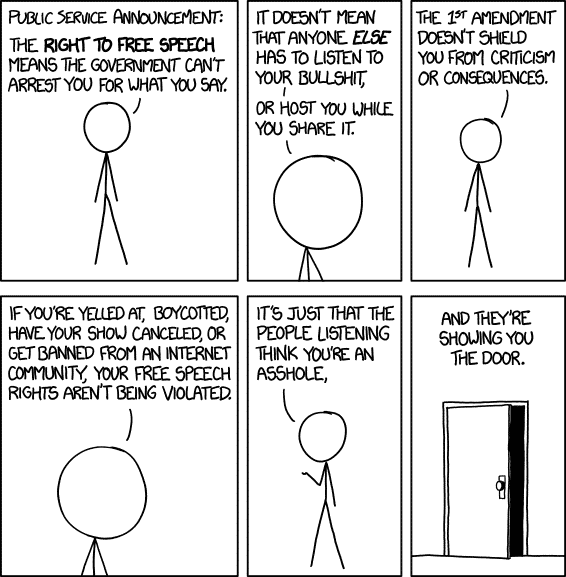
    I can’t say that I’m going to miss Milo Yiannopoulos on Twitter. I didn’t follow him before, but the antics around his ouster from the site raise a point that a lot of people seem to forget: As a company, Twitter has the ability to choose who can and cannot use their platform. As XKCD made clear, this type of action is not an issue of free speech. In a world where freedom of speech really is constrained in many ways, complaints like those of his followers obscure this fact. That we can complain at all is great, but Milo’s Culture War, imagined or not, does not constitute an abridgement of his first amendment rights.

    “Free Speech” by Randall Munroe – xkcd

    Facebook Completes First Test Flight Of Its Giant Internet Drone

    Daniel Terdiman, FastCompany

    Facebook wants to ensure that you can check your status updates from anywhere in the world. Actually they want to allow service providers to use their 737-sized drones to supply internet where they see fit. This would have come in handy for me the last few weeks while I was off the grid against my will. I imagine if this (or other systems being developed, like Google’s Project Loon) are put into widespread use, there’ll be locations set specifically to maintain a disconnect from the web.


    This device turns your iPhone into a Gameboy—and no, it’s not a joke

    Imad Khan, Daily Dot

    I’m still calling hoax on this, despite saying that the original press release started as an April Fool’s Joke that turned into a real product. Sure, someone could probably make something like this, but it seems kind of fishy that it’s mainly being discussed via Reddit, nevermind the fact that Nintendo would probably never allow this to use any of their branding.


    Pokemon Go Is Driving Insane Amounts of Sales at Small, Local Businesses. Here’s How It Works

    Walter Chen, Inc.

    Speaking of Nintendo, you may have heard of this game called Pokemon Go. If you own a small business with a physical location, Inc has an idea for how to get some new visitors by setting out lures, making gym badges, or otherwise welcoming players of the game. It’s not a bad idea to capitalize on the success of the franchise in the real world. Staff at my favorite coffee place have been setting lures out during their shifts, which I’m told has been getting them higher tips.

  • This Week in Web #28

    Contrary to your social media feeds, Pokemon Go is NOT the only web news this week! While the gaming app has dominated computer and traditional media, turned society on its heads, and created a slew of new job opportunities (Pokemon Drivers, $20/hour), you can find all that information bombarding you on other news channels. We’re here to talk about what else is happening on the web.


    Humans Posing as Chatbots Trying To Be Human

    Ellen Huet, Bloomberg Technology

    If you fear the AI takeover will happen any day now, this article will help you rest easier. Behind every good chatbot there are hundreds of people influencing its behavior and machine learning capabilities. But what if I told you there are actual humans posing as those chatbots more often than you think? Enter the AI trainer, humans whose jobs are to review, screen, and correct chatbot responses to ensure accuracy. Even though AIs are supposed to surpass us all with logic and efficiency, all the logic in the world can’t always answer oddly phrased requests from live humans. Until AI reaches the level of understanding sarcasm and figurative speech, we’ll still need AI trainers pushing the buttons from the shadows.

    What would the Turing test say about these hybrid bots? While we’re on the subject of AI, take a look at the impact the European Union’s new regulations might have on the use of artificial intelligence algorithms.


    The Internet is Influencing Literature and Media in More Ways than One

    Lexi Pandell, Wired

    Can an avid Twitter user be considered an author? The Internet and social media have shaped what we consider sources of news and given us new methods of storytelling. Social media content turning mainstream media is happening more often than you think. From the cell phone video shown on the nightly TV news to blog series turning into major motion pictures (I’m looking at you, Julie and Julia), more and more of our media and entertainment is coming directly from the Internet. This new print novel (or eBook, because of course), So Much for That Winter, brings about a new writing style pandering to the social media-saturated culture.

    We no longer read articles and books like our forefathers. News sometimes comes in clips and bits, piecing together the story of Prince’s death in 20 tweets per second with the hashtag #RIPPrince. We learn about major social issues through firsthand accounts on Facebook Live videos. We are now the eyewitness news reporters. But with this new floodgate of information comes a new code of control. Just like a TV station, Facebook and YouTube have to determine what is appropriate and what is not, sometimes in the wake of controversy as recently seen with the Reynolds video. The next time you’re overwhelmed by a new flood of news from the Internet, sit back and question how much more noise there would be without server-side censorship?


    Mr Robot Premiere
    Image courtesy @whoismrrobot

    In Mr. Robot Season 2 Premiere, Art Imitates Life

    Mr. Robot, the semi-dystopian tale of modern-day anarchy at its finest, is back for a second season and already making a splash in its own unique way. Prior to its official premiere on July 13, the fictitious “fsociety” hacker group did exactly what hackers do and breached the Mr. Robot official Facebook page. The video was a brief clip, a message (read: threat) against Evil Corp followed by a short montage catching us up to the events of the end of season 1.

    The video has since been removed, only to have the entire first episode uploaded to Twitter not long after. The tweet came two days before the official premier, masquerading as illegal footage that “won’t be here long”. Looking back on the Mr. Robot twitter feed, they apparently bounced the “leaked” video around to several outlets – YouTube, Snapchat, Facebook, usanet.tv – all before taking them down to let the light shine on the real broadcast premiere.

    If you haven’t already watched season 1, I highly recommend grabbing your Amazon Prime Video subscription and giving it a whirl. It’s an amazingly accurate look at the very freedoms being lost and the crimes being committed, all thanks to the World Wide Web.


    Netflix is Once Again the Center of Net Neutrality and Online Freedom Debates

    A large portion of the Internet was in a panic recently when the U.S. Ninth Circuit Court of Appeals ruled sharing passwords is grounds for prosecution under the Computer Fraud and Abuse Act. The ruling came from the case of david Nosal, a former employee of an executive search firm using a co-worker’s credentials to hack his former employer’s database. But the Internet being the Internet reacted with panic along the lines of, “If you share your Netflix password the FBI is going to arrest you.”

    Here’s the good news: you won’t be going to jail for sharing your Netflix password. Netflix has publicly stated that it likes when its users share their Netflix with friends. And they are right to do so. Many people who “mooch” off their friends’ Netflix accounts eventually become paying customers once they’re hooked (that is if their friend cuts them off). Plus, Netflix does have stream limits, so users are encouraged to get an account of their own if they see the “There are too many devices using this account” message too often.

    Netflix also made a splash in the news recently with the announcement of their partnership on Comcast’s X1 interactive television box. Comcast customers will get this new enhanced box with their service that comes pre-installed with Netflix. No word on whether there will still be the separate Netflix fee (likely) or how this will work if you only have a TV service subscription and no Internet connection.

    This partnership creates an interesting caveat in the net neutrality battle. Netflix – a strong supporter of NN – is choosing to put its eggs in Comcast’s basket, potentially protecting its service if NN fails and ISPs are able to throttle services at will. If throttling does come to pass, will this make Comcast come out on top as the keeper of the Netflix?


    DNA sequence
    DNA sequence image courtesy Flavio Takemoto

    Used 23andMe? Your Genetics Are Now Third-Party Property

    Sarah Zhang, Gizmodo

    It seems nothing is sacred these days to info-hungry marketers. First our social profiles were mined, and now they’re trying to get into our genes. (That joke’s better read aloud) The popular genetic testing kit, 23andMe, promised users a look into their genetic history and fun facts like why they’re predisposed to like certain foods. The kits were met with some controversy from the start, with the FDA questioning their data regarding a person’s risk of serious diseases. But now there’s a new controversy – your genetic data just landed in the hands of big pharma.

    The biotech company Genetech is paying 23andMe $60 million for access to its 800,000-strong genetics database. They say the research will go toward studying Parkinson’s  for now, but there are questions about what other uses the database could have. Users of the service do have to sign a consent document for their data to be signed over to third-parties, and about 85 to 90 percent of the users have signed. But the Parkinson’s research is just scratching the tip of this big gray iceberg…will the results of this gene-mining bring about new cures, or give big pharma more ways to manipulate the health care market. Time will tell.


    The FBI Says Malware Isn’t Illegal if They’re Using it for Good

    William Turton, Gizmodo

    If this isn’t government privilege I don’t know what is. The FBI is claiming their use of malware in the takedown of a dark web child pornography website is legal, because it was for a good cause. But that’s not what some judges are saying after dismissing evidence from the sting because it was obtained without proper warrants and with malicious tactics. The FBI countered saying it’s not malware because they’re the good guys!

    This gets into a legal gray area of social justice hacking. This case could set a new precedence for vigilante hackers (see Mr. Robot story above) when their actions lead to a positive outcome. Hacked the social profiles of your neighbor to gather evidence to convict him of child molestation? You’re a hero to the neighborhood, but potentially a felon in the eyes of the law. While we debate over the ethics of using hacker tactics to save innocent children, a sly change to Rule 41 (not to be confused with the Internet’s Rule 34) which expanded Federal Criminal Procedure to allow warrants to hack any computer even without knowing the status of the computer’s user.

    Bottom line: don’t do bad things on the Internet and you won’t have to worry about being arrested…for now.


    david returns next week with your original flavored web news!

  • This Week in Web #27

    david’s on vacation, and he foolishly left TWiW in my hands for the next two weeks! Don’t worry, it’s the same garden variety internet oddities you’ve come to know and love, just written by me, Lisa (the lmelegari that contributes all the time).


    Pope Francis Turns to YouTubers To Promote Positive Influence

    Brian Crecente, Polygon

    So this is actually a bit old for news, but it’s deserving of some commentary. Religious affiliations aside, you have to admit that Pope Francis is really embracing modern technology and media. This meeting is the latest convergence of the modern world and old school religion, and one that sends a positive message anyone can get behind. The fact that the Pope focused on empowering these YouTube stars to keep up with their type of positive influence spoke volumes. In the past, a Pope given this opportunity to speak to an influential audience might have attempted to persuade them to promote religion rather than their own positive agendas.

    Like it or not, YouTube celebrities are becoming a focal point of our culture. You can read more about the meeting from YouTube’s Official Blog.


    The Fappening
    Image courtesy Reddit

    The Aftermath of 2010’s Sexiest Hacks

    Two of the biggest and sexiest hacking stories of the 2010’s thus far are the products of Ashley Madison and iCloud. The former involved over a million accounts on the adultery website having private data exposed, potentially ending thousands of marriages and causing a ton of public ridicule. But that’s not the end of the story, the parent company of AM, Avid Life Media, is now facing an FTC probe of currently unknown purpose. The FTC was already investigating claims of fake AI chatbots posing as female humans looking for adulterous companions. Several class action lawsuits are still in the works for the compromised details. Meanwhile, the company’s new executives are looking to revive the brand, potentially shifting the focus from infidelity to…something else? Puppies? Knitting? Who knows, but Rob Segal and James Millership have their work cut out for them.

    Next, comes the tale of the celebrity nudes iCloud hacks of 2013 and 2014. Dubbed “The Fappening” by some, hackers gained access to over 300 iCloud accounts, many of them A-list celebrities with photo albums full of nudes. Once these hit 4chan, they spread like wildfire, causing many a red-faced Hollywood starlet. The second of the hackers, Edward Majerczyk, just had his day in court and signed a plea agreement for taking part in the “Celebgate” hack. Along with co-hacker Ryan Collins, who also signed a plea agreement, he’ll be serving jail time. Majerczyk faces up to five years jail time for violations of the Computer Fraud and Abuse Act while Collins is looking at a recommended sentence of 18 months. If you can find any good in this story, it’s that following the leak; Apple beefed up its iCloud security with email alerts, two-factor authentication, and app-specific passwords.


    UN Declares Unrestricted Access to the Internet is a Basic Human Right

    Corey Mueller, Popular Science

    You can add “unrestricted internet access” to the UN’s list of undeniable human rights. The global governing body has introduced a non-binding resolution to prevent governments from deliberately blocking or preventing their citizens from internet access. While this doesn’t mean the world wide web will be coming to every nook and cranny of the Earth anytime soon, it will help people in places such as China see the full scope of the internet and not just what their government wants to see.

    Now if only this move will get the United States to do right by net neutrality and keep our internet as free as our country. ‘merica!


    AI May Beat us at Chess, But it Won’t Remember Our Face

    Siyi Chen, Quartz

    With the world starting to anticipate the dawn of our robot overlord uprising, a story out of China serves to humble AI just a bit.  At the “Facial Recognition Olympics” (so that’s a thing now), Wang Yuheng correctly matched photos of adult women with their childhood pictures, a feat his AI competitor “Mark” could not do as well. Of course, this is after Mark and Yuheng tied in the first two rounds. Mark is the AI of Alipay, the largest digital payment service in China. Yuheng is well known for his photographic memory whose feats include identifying a specific glass of water out of 520 other seemingly identical ones.

    While this seems like a victory for humankind, it’s only a matter of time before Mark exceeds his 99.5% accuracy rate and knows each one of us in more ways than just looks. Soon we’ll have AIs doing all our banking, selling our deli meats, even writing our newsletters! (I’m not a robot, I swear) But will they ever love us? Probably not.


    The Voice Behind the Internet of the 90’s

    Great Big Story

    If you’re a 90’s kid like me, you grew up with moments of glee when you heard the familiar “You’ve Got Mail” and “File’s Done” soundbites of the AOL dial-up software. Those words and that voice were a sign from the gods, you were finally connected to the internet after 20+ minutes of dialing and praying no one in your house picked up the phone.  What many of us didn’t know was that voice belonged to a real man, Elwood Edwards, and the AOL gig may have ruined his voice acting career. Little did Elwood know that his iconic voice would reach millions, but net him nary a dollar for the efforts. His only other claim to fame was a brief voice-over on The Simpsons, but hey, that’s more than I can say about my acting career.


    Pokemon Go load screen
    Image courtesy Pokemon Go

    Pokemon Go Players are Walking into Trouble

    It’s here. After over a year of hype, missed release dates, and more hype, Pokemon Go is available in the US. This game did what DDR and WiiSports couldn’tL it made me want to, CRAVE to exercise. All in the name of catching a Pokemon. But there are already safety concerns with the new app which uses augmented reality to put Pokemon in our environment in real time. For safety’s sake, I took my father on my walk into the wild (i.e. my crappy neighborhood) and yes, he did have to tell me once or twice to watch where I was going. But I’m not the only one walking into peril for the sake of nabbing a fantasy critter!

    Reports from the Darwin Police Station in Australia (where the app launched first, probably coinciding with Japan’s time zones) say players are walking straight up into their station, which is unfortunately marked as a PokeStop (a place to get free items). USA Today has a slightly pissy article on the game, written from the perspective of a journalist who’s never had the thrill of catching a legendary bird after the 25th reset. The game’s loading splash screen (pictured above) has a comical rendering of what might happen if you’re not careful to look up. But remember kids, Gyarados can’t hurt you in real life, but a moving vehicle can.

    Of course, there are already exaggerations of the dangers of the game. Fake news site Cartel Press reported on a Chicago teen getting mugged and stabbed for his iPhone after wandering into a “bad neighborhood” while tracking a Pokemon. Another (true) quirk of the game is that many of the PokeStops are located at churches, leading some fans to believe the game is trying to push religion. Personally, I think it’s just the most common, non-commercial landmark that’s almost guaranteed to be present in any semi-populated area. But fret not, I’m sure the McDonalds or Starbucks tie-in is coming soon. “You must buy at least one (1) more McFlurry to enter this Gym!” (props to mgoldstein of the IE Slack channel for that joke)


  • This Week in Web #26

    This Week in Web #26

    Sixty Years of AI

    It was the summer of 1956 when a team of computer scientists convened at Dartmouth college for the first summit on artificial intelligence. Since then the predictions made at the conference (which was based on the assumption that a handful of researchers could crack the problem with a few years of work), have come tantalizingly close to true, if much longer than originally expected.

    The advent of virtual humans is nearly upon us. There will invariably be other missteps on par with or beyond Microsoft Tay, who took after Twitter users that taught the bot to be racist and inflammatory in just one day. Pretty soon, AI will be coming for my job as well, not just taking over trucking with self-driving vehicles, but building websites better and faster than I can for many use cases.

    The next six years will surely bring more advancement in this excitingly terrifying field than the past sixty. Perhaps I can use it to write newsletters for me by then?


    Facebook to Change News Feed to Focus on Friends and Family

    Mike Isaac and Sydney Ember, New York Times

    First Facebook reels in every major news company with Instant Articles and the higher traffic numbers that come from sharing articles in their walled garden. After everyone was well and hooked, Facebook slowly started ratcheting back the reach of posts made by businesses and pages, and continued to make it harder to interact with people who expressly choose to consume your content without paying for the privilege.

    Facebook has just updated their News Feed update blog to announce that they want to make sure that you never miss stories from your friends and family, by pushing them higher on the news feed. That’s a great concept, but in practice, it means an even harder time for groups and pages who have fans to share their content. The move means that even more companies will have to make the switch to live video, as well as encourage their fans to share content, as opposed to just interacting with it on their own pages.

    Facebook already has a problem with blocking content that may not be contentious for a variety of reasons, despite what their own guidelines say. This news should be a reminder that you cede all control when you enter someone else’s platform, as many organizations who tie their fortunes to Facebook feeds find.


    Researchers Sue the Government Over Computer Hacking Law

    Kim Zetter, Wired

    Speaking of seeing things online, researchers and First Look Media have filed a lawsuit against the Justice Department in an attempt to invalidate parts of the Computer Fraud and Abuse Act that they believe violates both the first and fifth amendments. The researchers believe that the need to create fake profiles on websites to investigate things such as racial bias among AirBNB hosts, or even worse, in criminal profiling and bail setting.

    It is a necessary step, as with ombudsmen and public institutions, to allow the study of the effect of increasingly important algorithms and data systems on our lives. The most insidious biases are those invisible ones that function by the fact that we cannot notice their existence.


    Chatbot lawyer overturns 160,000 parking tickets in London and New York

    Samuel Gibbs, The Guardian

    At 19 I was coding, but I wasn’t creating anything that was allowing over a quarter million people to contest parking tickets, with a 64% success rate and $4 million in saved fines. That’s what self-taught coder Joshua Browder has done, with his chatbot service DoNotPay, that currently works in NYC and London, with plans to expand to other cities.


    Github Repository Activity
    Github Repository Activity Over Time

    The heartbeat of open source projects can be heard with GitHub data

    Steven Max Patterson, Network World

    Github posted on their blog last week about how popular Open Source projects are managed and contributed to on the platform. It makes sense that comments and pull requests grow in comparison to commits, as more popularity for a project leads to more group decision making, and less direct oversight by one individual on updates.


    Apple gets patent to disable cell cameras at concerts, and it’s super evil

    Apple’s been working on this for years, and it’s not terrible at all. I mean, when besides concerts would anyone ever want to disable recording equipment on all cellphones in a given area? Heck, why would we ever want to allow it at concerts either, let alone the many places that this technology would very definitely be abused?

    This story was submitted by @lmelegari. If you’ve got any cool net scoops, send them over!

  • This Week in Web #25

    This Week in Web #25

    Physical Privacy for Mark Zuckerberg's Laptop
    Via Mark Zuckerberg’s Facebook Profile

    Mark Zuckerberg Is Right to Tape His Webcam. But He Shouldn’t Have To.

    Will Oremus, Slate

    It’s not that weird that someone as high profile as Mark Zuckerberg considers basic cyber security. After all, as we mentioned a few weeks ago, even the CEO of Facebook is not immune to hacking.

    A good point is made though that maybe he shouldn’t have to think of this in the first place, as none of us should have to. Webcam hacking is more commonplace than you may think, and an easy hack to pull off. While covering the camera with tape won’t stop audio recording (his microphones were also covered), it does protect against folks that may seek to exploit the cameras and serve as a reminder of common security practices that we have to endure until laptops include physical toggles on their sensors.


    Gotta Go Fast! Sonic Graffiti photo Fuzzy Gerdes on Flickr
    Gotta Go Fast! Sonic Graffiti photo Fuzzy Gerdes on Flickr

    How Sonic the Hedgehog Explains the Internet

    Brian Feldman, NYMag

    Sonic the Hedgehog turned 25 years old this week. The character has been around almost as long as the world wide web, and certainly longer than it has been in general use. The entire franchise has in some ways mirrored the growth of the commercial internet, from genuine infatuation to ironic self-referential meme-ing.

    Do yourself a favor and follow the official Sonic Twitter account. The leeway that’s been given to the team to be authentically internet is a welcome departure from corporate straight-lacedness.


    Taking the headphone jack off phones is user-hostile and stupid

    Nilay Patel, The Verge

    I have no idea if the next iPhone will truly have no headphone jack, but I can’t really see wanting that right now. We’ve got fewer wired accessories needed for a laptop, but I’m still not ready to ditch it all for USB-C yet. Similarly, there’s an entire ecosystem of products (including for people who have them more as needs than luxuries) that rely on headphone ports. Getting rid of the port after it’s been so ingrained without a universal-ish replacement is a bad idea.


    How “Silicon Valley” Nails Silicon Valley

    Andrew Marantz, The New Yorker

    The third season finale of ‘Silicon Valley’ is this weekend, and I’m excited to see what cliffhanger we’re left with. In the meantime, let’s take a look at how much the show is really like the real world, and why that made it such a success for HBO. As much as the real Silicon Valley produces much of the technological wonder in the world, it’s a place of heavy contradiction and tight-knit circles.

    It’s nice to see that the elite who are being skewered can take a joke enough to provide background research for the show, or even appear on it. You know, unless they’ve got as thin of skin as Peter Thiel clearly has.


    How Peter Thiel’s Gawker Battle Could Open a War Against the Press

    Nicholas Lemann, The New Yorker

    Speaking of Mr. Thiel, the outcome of his case against Gawker, and the amount of involvement that he’s been revealed to have had, makes a scary case for the future of freedom of speech protections for the press. With more news organizations starting out by single founders in the way of Nick Denton’s media empire, more individuals without billions of dollars and teams of lawyers are in danger of retribution for writing something that powerful people don’t want to hear. Is repeating negative stories going to be an issue for my own newsletter?

  • This Week in Web #24

    This Week in Web #24

    Orlando, the City Beautiful and Strong

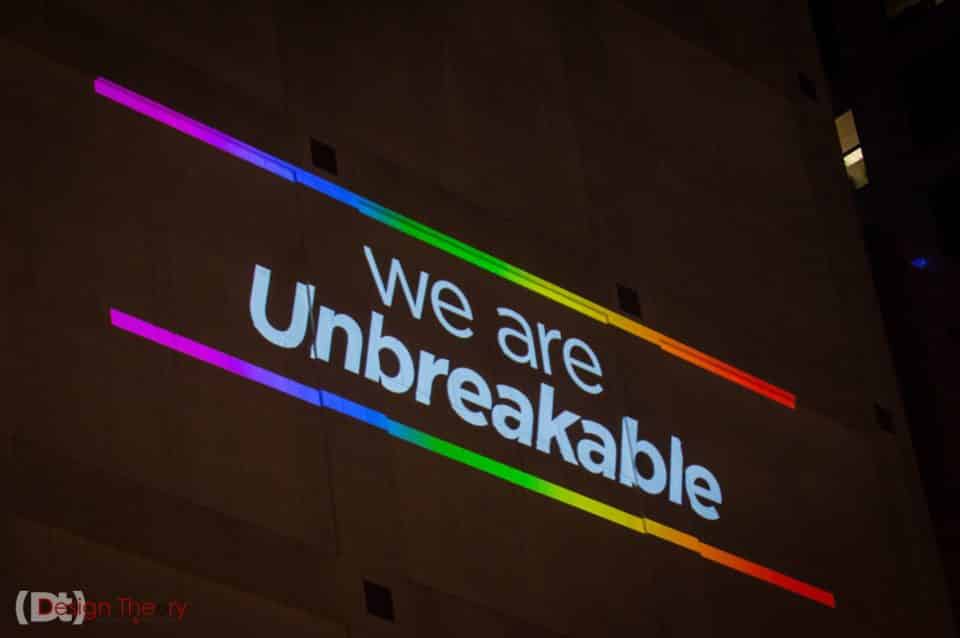
    Orlando is Unbreakable
    Photo at Orlando Vigil from jpDesignTheory on Flickr

    I am gay, half-Latin, and I live in Orlando, Florida. I have never been involved with any violent crimes and was thankfully not involved with the horrific murders that took place in my city on Sunday morning, but this is the closest anything that notorious has occurred to me.

    It is the internet that is allowing so many varied viewpoints and reactions to enter my filter bubble, with the heartbreak and frustration that accompanies. It is also the communities that I am part of – both offline and online – that have shown amazing support all week. Facebook, Twitter, Email, Text, and Phone have all been used by friends to check in and ensure that I’m doing alright. The internet creates and maintains connections between us all. This is the reason that I love it. This is the reason that I will defend it as hard as I can.

    I’m always going to think of all of those lives taken in my city. I’m also going to think of the outpouring of support that immediately followed, proving that love will always outdo hate.


    What’s going on with Net Neutrality?

    The ruling of the DC Circuit Court on the FCC’s proposed net neutrality was delivered earlier this week. Regulations proposed in 2010 and 2014 both failed, but the FCC seems to have learned its lesson, submitting a detailed document with the intent to counter every argument against their proposal. Their hard work appears to have paid off, as the court threw out every single one of the arguments.

    The main point of contention revolves around the classification of broadband service. The Telecommunications Act of 1996 created definitions for telecommunications services and information services. Broadband was classified as a telecommunications service at first, switched to an information service in the early 2000’s, was challenged as far back as 2005, but has stayed that way until now.

    Broadband providers like Verizon and Comcast have argued that since they bundle internet service with things like email accounts and hosting, which are unquestionably information services, the entire bundle including the telecommunications portion should be classified as information. A middling analogy of their argument is saying that since your bloody filet mignon has a side of carrots and beans (that you probably won’t eat anyway), the meal should be considered vegetarian.

    You can see a more detailed breakdown of what this all means in a Vox story on the ruling.


    I am sending pouting selfies to a robot. Its AI is well buff

    Alistair Dabbs, The Register

    Do you want to be judged on your looks by artificial intelligence? You’re in luck then! Beauty.ai is a website that aims to teach computers to recognize human beauty. You’ve still got time to upload selfies to be judged by the computers, or if you are a data scientist you can work on algorithms to do the judging. Finally, scientific validation of subjective beauty!


    Manners maketh Nan: Google praises 86-year-old for polite internet searches

    Oliver Holmes, The Guardian

    There’s not much of a story here beyond the straightforward: Ben posted a picture of his grandmother’s Google search in which she asked Google to please translate some roman numerals, thank you. The tweet took off in popularity which was only increased when the @GoogleUK and @Google accounts responded to the tweet.

    While Google doesn’t have individuals answering all search queries, it’s cute to think about, and a reminder that good manners get you places.


    Disturbing new site scrapes your private Facebook and informs landlords, employers

    Chris Matyszczyk, CNet

    Score Assured is a new company that scrapes social media accounts to calculate scores for landlords and job recruiters. Presumably, this is done through sentiment analysis, as well as an unknown algorithm that creates a profile of how good you would be as a potential tenant or employee.

    While many states are passing legislation stopping employers from requiring that you hand over passwords (which is not even close to unheard of), the sneaky workaround of a plan like Score Assured is the opt-in status. Sure, you have to opt-in to a request to view your private Facebook, Twitter, Instagram, etc. for the system to work, but what’s to say that a disqualifier for consideration is a refusal to do this?

    Potential future employers: save time and let me know upfront if you ever want access to any of my accounts. I’ll save you time by pointing out that they are not currently private, and that I have no interest in working for your company.


    Starbucks launches its Microsoft Outlook add-in for coffee fiends

    Blair Hanley Frank, PC World

    When Starbucks integrated with Twitter to allow users to send digital gift cards to one another over the service they made a ton of extra money. Now they’ve integrated with Outlook to offer the same feature, as well as a meeting feature that allows you to schedule in person meetings at the nearest Starbucks. Anyone care to get coffee with me?

    This story was submitted by @lmelegari. Don’t forget that you can suggest stories for the newsletter!

  • This Week in Web #23

    This Week in Web #23

    Urlesque and Memes
    Illustration by J. Longo

    The rise and fall of Urlesque, the site that wanted to take memes mainstream

    Rae Votta, Daily Dot

    I admit, I was never even aware of the existence of Urlesque (which is no longer active but with remnants existing in HuffPost Comedy), but hearing this retelling of the site’s short existence at AOL by one of its contributors makes me wish that I had been in the know sooner. Part of the reason that I started this newsletter was to examine internet culture, which at turns is getting more homogenized and sanitized in the mainstream, while an arms race of non-sequitirism exists on the fringes, daring the uninitiated to enter at their own risk.

    I think that a part of the meme-ification of culture is, in addition to the sheer virality of a single idea over a longform topic, an easy way to become part of a club. While the origins and meanings of individual memes may baffle onlookers as much as the actual content, a handshake has been performed by those involved saying “yes, I am in on the joke and we are alike”. Urlesque might be gone, but Know Your Meme, Buzzfeed, and many others have taken up the mantle of documenting what disparate corners of the web are finding funny and meaningful.

    Memes are shorthand for a state of being or to quote a meme concept that has passed it’s prime, they can describe “that feeling when“. The joy of sharing memes online isn’t necessarily in figuring them out or describing them, but in reveling in a group at a shared experience. Even though I was never onboard Urlesque, I’ll miss it, as we can never have enough forums to share the wonderful oddities produced and amplified by the web.


    Online Reviews? Researchers Give Them a Low Rating

    david Streitfeld, The New York Times

    There’s a restaurant named Botto Bistro near San Francisco, which prides itself on “Authentic Tuscan cooking with attitude, also specializing in getting the worst reviews on Yelp!” The Yelp reviews for the restaurant match this, at least for the people who are in on the joke. The owners are protesting the fact that you can’t opt out of being reviewed by the service by requesting that customers leave them a one-star review on the service.

    Should you rely too heavily on online reviews? Botto’s owners don’t think so. Nor do studies that suggest that beyond reviews being outright fabricated or paid for, the algorithms and shortcuts that many sites rely on to get a five-star scale out of a complex system of pros and cons. Keep in mind next time you decide which restaurant to go to or which movie to go see that the numbers online cannot be an accurate reflection of what your future experience will be, and are often gamed to raise expectations.


    Why you should think twice before spilling your guts to a chatbot

    Nathaniel Mott, The Christian Science Monitor

    When chatting to a computer you may assume that your conversations are being parsed by a computer, never to be seen by humans. But even if that’s the case, why should the computer be trusted any more with your personal data?

    Nathaniel interviews several researchers who point out that users may be willing to hand over even more personal info to a chatbot than they would in an online form or to a pollster, as the conversational nature makes people more inclined to be forthcoming. Combine that with all of the other info that the bot could potentially know about you based on connections to other services, and suddenly a more personalized picture of every user emerges.


    https://twitter.com/sophieGG/status/738757010037080065

    Will One of These New Emojis Replace the Eggplant as the Dick Symbol?

    Kaleigh Rogers, Motherboard

    Popular phone keyboard alternative, Swiftkey, tracks which emoji are being used and in what combinations. The eggplant emoji is used over four times as often as the ear of corn, which was released at the same time. With the many new food emoji added, until the Unicode consortium straight up ads penis emoji, will any of these overtake the vegetable as the de-facto standard for suggestive texting?

    Just make sure that whoever you send dicks to, real or food-emoji-based, that they requested them first. A Facebook user is petitioning the company to ban users from sending unsolicited sexual photos via private message, which aren’t monitored and flagged in the same way that public posts are.


    “Protecting Internet Freedom Act” Introduced By Cruz

    Michael Berkens, The Domains

    Senator Ted Cruz has introduced an act with the intent of extending a contract indefinitely between the National Telecommunications and Information Administration and Internet Assigned Numbers Authority, allowing the latter to continue control of TLD ownership and management, as well as assigning them. This would in effect be similar to ICANN management of TLDs as exists currently, but without the concern that the act’s authors have of this going away, as is currently being discussed in the wake of the Snowden leak that demonstrated the amount of spying done by the US government on every connected person and device on the planet.

    I don’t know if I agree with the phrase that they need to “ensure that the United States maintains sole ownership of the .gov and .mil top-level domains, which are vital to national security”, but I’m also not well versed on what exactly would happen were other countries (that also have militaries and governments) able to utilize those extensions. While the support for this bill is worded as much as anything in politics is, basically as “the person who I am opposed to politically thinks this way, therefore he’s wrong and this is what we should do”, it’s not just as easy as choosing to be for or against the concept simply by who proposes it. The general issue of internet ownership and management is as important as any other trade agreement, and it should be handled with care and deliberation.


  • This Week in Web #22

    This Week in Web #22

    Hacks, Hacks, Hacks

    The increase in data breaches begets data breaches

    There are always hacks coming along, but it seems that popular social networks have been getting a lot of it lately. LinkedIn, Tumblr, and even the “Do I still have a site here?” Myspace have had security breaches that are just coming to light. Note that most of the breaches are from several years ago, with the information only now becoming public as the information has started to go on sale online, most likely by the same person. While we don’t yet know how many companies were aware of intrusions before the data went up for sale, it seems fairly coincidentally timed that the European Union General Data Protection Regulation went into effect last week, which among other things requires timely notification to authorities of significant data breaches that affect EU customers.

    The first place that users are affected is through the individual sites and any data that is breached from them, but the secondary wave of data insecurity can be just as bad, or worse. LinkedIn may reset all passwords preemptively, for instance, but hackers are well aware that many users don’t vary their passwords if they don’t have to, and that a login at LinkedIn may be just as secure as a login at a bank or health services provider. When the data is exposed for years, the odds of secondary breaches go even higher. Plus, as the Myspace hack illustrates as a punchline – yes, the service still exists, and just because you forgot about it doesn’t mean that it forgot about you. It kept all of your data around for your potential return, which suits hackers that want larger and larger hauls just well. The large amounts of data leaked make it even easier to hack other sites in the future, as it gets increasingly trivial to crack accounts when a more detailed profile of account holders or just plain old heuristic improvement.

    The FBI is warning of an extortion scam going around now, with threats of personal information being revealed and leaked unless Bitcoin is used to pay the extortionists. Whether or not you have anything incriminating depends on what you consider incriminating, but these extortionists most likely have nothing at all. Even if they have your accounts, there’s a lot to comb through, and the likelihood of actual thefts is lower than the number of reported accounts breached.

    You should be using a password manager, both to make your life easier and to make yourself more secure over the increasing number of websites that ask for personal or identifying information. Wired has a strong case for them, as well as a guide on some free ones that you can use today. Keep yourself safe while still able to enjoy the ease of the web!


    Micrograph of Malicious Hardware Test Chip
    Micrograph of Malicious Hardware Test Chip – University of Michigan

    This ‘Demonically Clever’ Backdoor Hides In a Tiny Slice of a Computer Chip

    Andy Greenberg, Wired

    Of course, it’s hard to secure our accounts when our devices are themselves insecure. In what has to be one of the most devious insecurity hacks ever demonstrated, researchers at the University of Michigan have built and reported on a technique that could allow anyone – even a single employee at a chipmaker – to insert themselves in the printing process of computer chips and create a trigger that would allow them to control an operating system after running some commands on the affected machine. The trigger itself is only a few microns wide, sitting on a single portion of a single chip out of hundreds that work in tandem to make your computer work. Currently there is no reliable testing method to confirm the existence of such a trigger.

    If you want to be even more paranoid, see how the top five PC manufacturers (and probably plenty of others) have insecurities in how they handle software updates that could allow bad actors to insert fake updates with malware.


    Mary Meeker’s Internet Trends

    Mary Meeker, Kleiner Perkins Caufield & Byers

    Every year since 2001 Mary Meeker has done an analysis on internet trends for Kleiner Perkins Caufield & Byers. The report is highly anticipated, and the 2016 report has been released this week and can be viewed here. Some of the most notable parts of the report are the slowed growth of the internet and mobile phone sales, and low interest rates contributing to slow economic growth worldwide as well. The report is a must read for economists, marketers, and anyone looking to expand their businesses.


    Top Spelling Questions Googled by State
    Top Spelling Questions Googled by State from Google Trends Twitter

    These Are Each State’s Most Commonly Misspelled Word On Google

    Tom Hale, IFL Science

    If you live in Florida like me, the word that you were most likely to Google “how to spell” is “tomorrow”. Thankfully I was able to spell that without checking, but maybe it’s harder than I thought and I’d better Google it…

    You can also see the most common questions asked by state compared to other states. I used to live in Kansas, and I can attest that “How to make meth?” is a common question. I don’t need to ask “Why does everyone hate Florida?” though, as I’m fully aware of Florida Man.

    Thanks to TWIW contributor Lisa for submitting this link. Don’t forget that you can suggest a story here.


    Facebook, Twitter, YouTube and Microsoft agree to remove hate speech across the EU

    Romain Dillet, TechCrunch

    The European Commission created an agreement with several major tech firms to help curb hate speech online. Specifically, the goal is to tackle the heavy use of groups like ISIS who use social networks to garner support and gain new followers, both online and for in person attacks. The new agreement involves tackling reports within 24 hours, which will greatly reduce the amount of time offending accounts are active, if handled properly.


    FTC: Different Privacy Rules for ISPs ‘Not Optimal’

    Lydia Beyoud, Bloomberg

    The FTC is calling on Congress to strengthen privacy protections for internet data for all companies, not just ISPs, as stated in a filing submitted last week. The FTC has vowed to continue protecting consumers and fighting for digital rights despite the Title II reclassification last year in the Open Internet order that put ISPs under FCC control.

    The issue that the FTC is highlighting is that while regulations are being placed upon Internet Service Providers, those same regulations don’t affect the larger data gathering entities in the US, such as Facebook and Google. Their argument (and that of affected ISPs) is that the reason for regulation demonstrates that it’s being unevenly applied, and there are other fish to fry.

  • This Week in Web #21

    This Week in Web #21

    Peter Thiel at Hy! Summit
    Peter Thiel at Hy! Summit. Photo by Dan Taylor, Heisenberg Media

    I’m at php[tek] this week, and while I’ve been busy with talks, games, and community nights, there’s so much news to cover. I’m pumped on PHP and on the future of the internet!

    We Love Peter Thiel! (ed. note: can we make this read less lawsuity?)

    A few months ago I wrote about the outcome of the Gawker/Terry Bollea case, where the court found in favor of the former professional wrestler and awarded his legal team more money than they’d even originally asked for. After some questionable legal maneuvers that didn’t make much sense for the plaintiffs unless you consider a more sinister goal than redressing losses, some digging was done. As was reported earlier this week by Forbes, it was confirmed that billionaire investor Peter Thiel was funding the legal case.

    This is, as Talking Points Memo editorializes, a huge huge deal, and an overzealous use of the power that money brings to force silence from people that you don’t agree with. Just as the use of overreaching surveillance leads to a chilling effect in speech, the ability for a third party to fund legal feuds without opening themselves up to retaliatory lawsuits can give the same effect to journalists. The reason that corporations and wealthy individuals want to be able to make unlimited political donations anonymously is the same reason for this type of behavior: the ability to use influence to sway affairs to their advantage without any transparency as to whose influence is being wielded.

    Peter Thiel is ostensibly a supporter of free speech, but not when it comes to people speaking about him. I am not a fan of Gawker in general (and their open letter yesterday doesn’t help), and this is one of those cases where you have to choose to defend ideals without supporting those whose ideals that you want upheld. I don’t support public outings (I am gay myself and need no one to out me, thank you), and Nick Denton supposedly relished the outrage and attention brought by his story about Thiel’s sexuality in late 2007. I can’t vouch for the reporting of Gawker, but they’ve got multiple examples of a coordinated attempt to destroy the company through use of his riches.

    If this whole thing sickens you, let this Wired piece in praise of Peter Thiel’s glory cleanse your palette. I only hope to achieve this level of sarcasm in my writing one day.


    The TSA is a waste of money that doesn’t save lives and might actually cost them

    Dylan Matthews, Vox

    The security theater perpetrated by the TSA for the past fifteen years is being stretched to the breaking point. This week the head of security for the agency has been fired, a pledge has been made to increase screeners immediately at many of the busiest airports, and the call has been made to get more people to sign up and pay for TSA Pre-Check. This leaves a huge vulnerability for sloppy checks of both potential agents to fill the ranks out quickly, and of the people who pay for the privilege to skip lines that only exist due to this agency.

    This simply does not work. It’s clear that the TSA is not built for discovering firearms or explosives, which dozens of reporters and security researches have demonstrated are easy to sneak in by determined individuals. The TSA exists to make people feel better, without making anyone actually better. Bruce Shneier put forth a call on his blog this week for reassessing airport security, and I think that it’s high time to listen.


    Coming soon: express even more in 140 characters

    Todd Sherman (@tdd), Sr. Product Manage, Twitter Blog

    Twitter changes up like every social media platform, but they actually seem focused on doing things that benefit their users more than just advertisers. This week they put a few new changes coming up on their blog which will stretch the 140 character limit just a bit. The developer blog post by Prashant Sridharan (@CoolAssPuppy) is a bit clearer on the changes, namely the fact that @replies starting tweets won’t remove them from your general timeline anymore, and

    The only feature that scares me is the fact that you can add up to 50 handles into a conversation without a character penalty, which means you can more easily force conversations that are unwanted. I can see this getting abused by spammers and marketers, as well as people who want to harass users into silence. Simon Owens wrote an article for Science of Us a few years ago about this exact problem, and now it appears that it could come true. I can only hope that the platform reacts quickly to abuse, and perhaps focuses on revamping reporting of those abuses next. It is certainly needed.

    Twitter is a different platform than Facebook, and it serves a different kind of user. The changes announced demonstrate that the company isn’t done iterating, and it’s going to make discussions fun again.


    EFF Applauds Jury Verdict In Favor of Fair Use in Oracle v. Google

    Parker Higgins, EFF

    Oracle and Google have been battling for years over the latter’s use of API calls in code for the Android OS to Java, which Oracle purchased from Sun. A jury on Thursday unanimously ruled in favor of Google, declaring the usage as fair use, but not going so far as to declare all API declarations un-copyrightable in the first place. Oracle has already announced plans to appeal the decision, which is predicated on a lawsuit for over $9 billion.


    Bandcamp, Downloads, Streaming, and the Inescapably Bright Future

    Bandcamp Blog

    In a world now ruled by streaming over downloads, Bandcamp has made a niche for independent artists who want to continue selling directly to their fans. By their own account, they’ve grown over 35% in the past year, selling $4.3 million dollars of music every month, directly from artists to fans. They make it very clear how much of the money is taken by payment processors and the platform, and how much goes to the artist, which amount to much much better terms than almost any other platform out there.

    If I can make a suggestion, perhaps subscribe to master composer Austin Wintory on Bandcamp?

🌙 ☀️